
Newsletter Sponsorship Insider
The top 3 newsletter sponsorship formats to use
For the last 30+ years, newsletter publishers monetized their newsletters using display ads (aka banner ads) inside their newsletters.
But times have changed.
Over the last few years, the rise of long-form, native newsletter sponsorship formats has completely reshaped how publishers earn revenue and how brands reach high-intent audiences. These formats outperform banner ads because they read like trusted editorial content while giving brands space to communicate value.
Publishers like the Morning Brew, the Skimm, and The Hustle introduced a new long-form native sponsorship ad format…
With the 3 most utilized being:
Title Sponsorships
Secondary Sponsorships
List Sponsorships
These formats work because they integrate naturally into newsletter content, keeping attention high and driving better engagement than traditional display ads.
If you’re exploring newsletter sponsorships and want to quickly see what’s performing across industries, you can book a quick walkthrough with out wonderful Wellput team anytime.
Here’s a deep dive on how to use these popular newsletter sponsorship formats:
For Newsletter Publishers 📧
To maximize your sponsorship revenue, here are the three key formats to offer (from highest to lowest price point):
1. Title Sponsorships
Let’s start with an example from the Morning Brew:
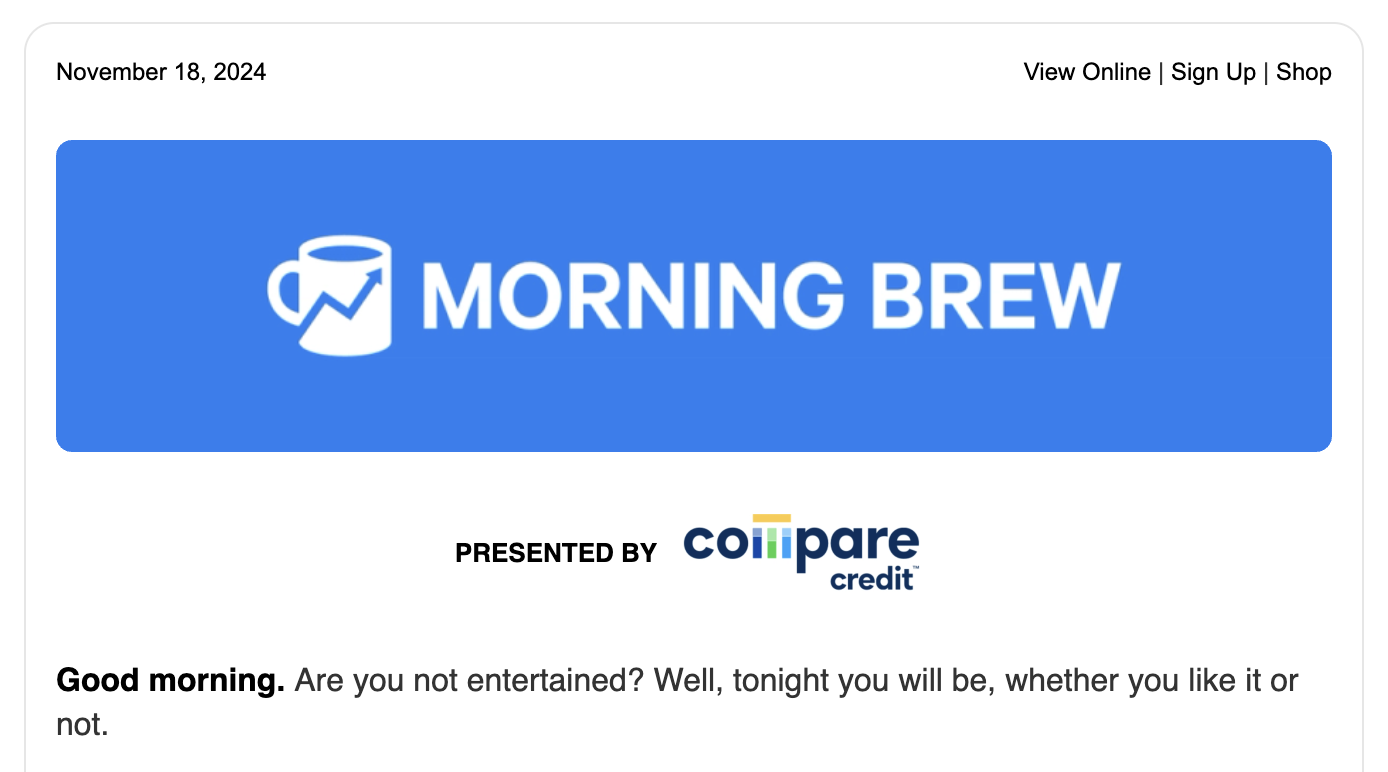
This premium placement includes:
“Presented by [Brand]” at the top
The first sponsored content position
This usually includes an image, headline, body copy, and CTA
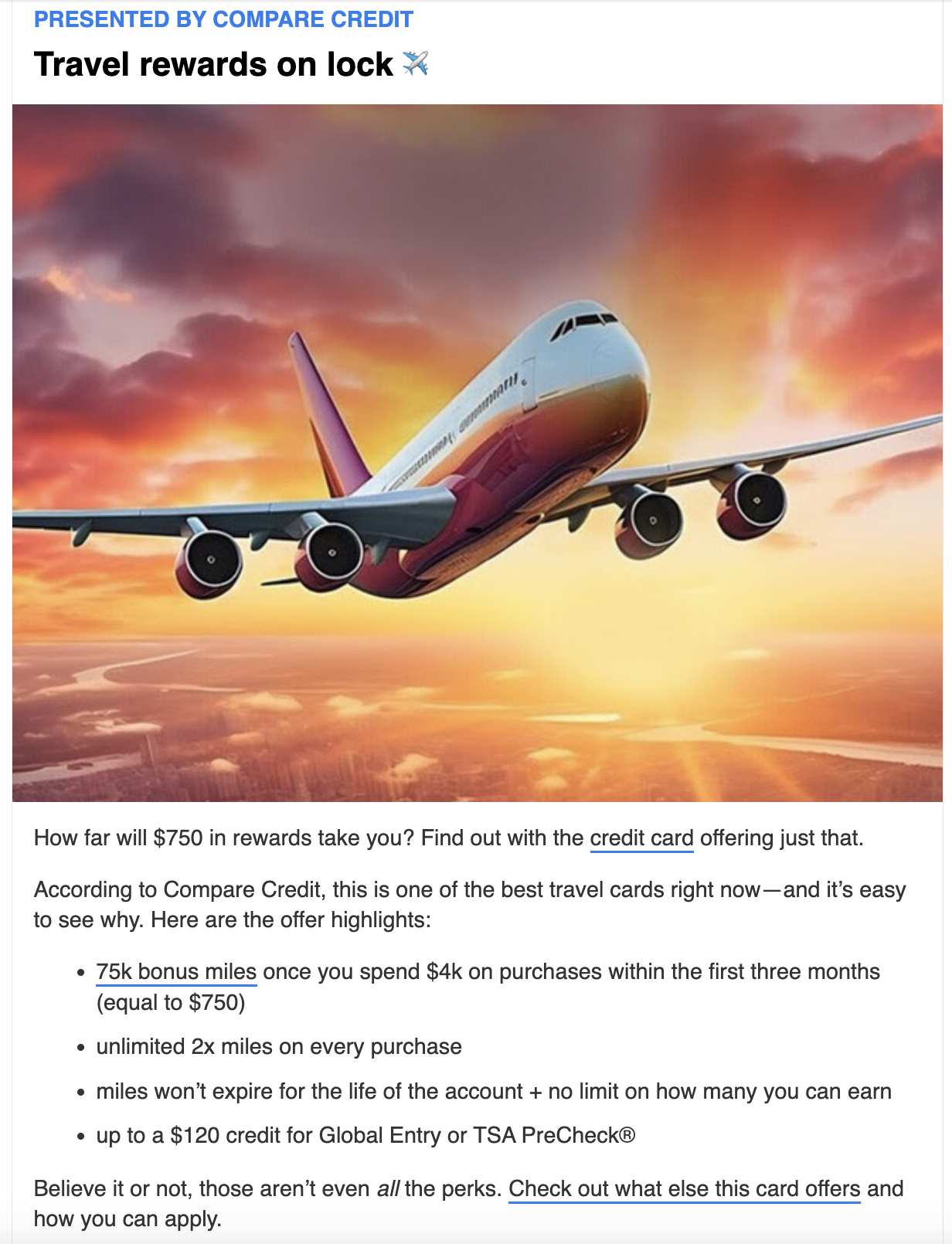
Why it works: It's impossible to miss, making it perfect for sponsors wanting maximum visibility.
Plus, by integrating long-form ad content into your long-form newsletter sponsorships content, it slides in under the radar…
Without immediately triggering someone’s brain that this is an ad and should be ignored.
2. Secondary Sponsorships
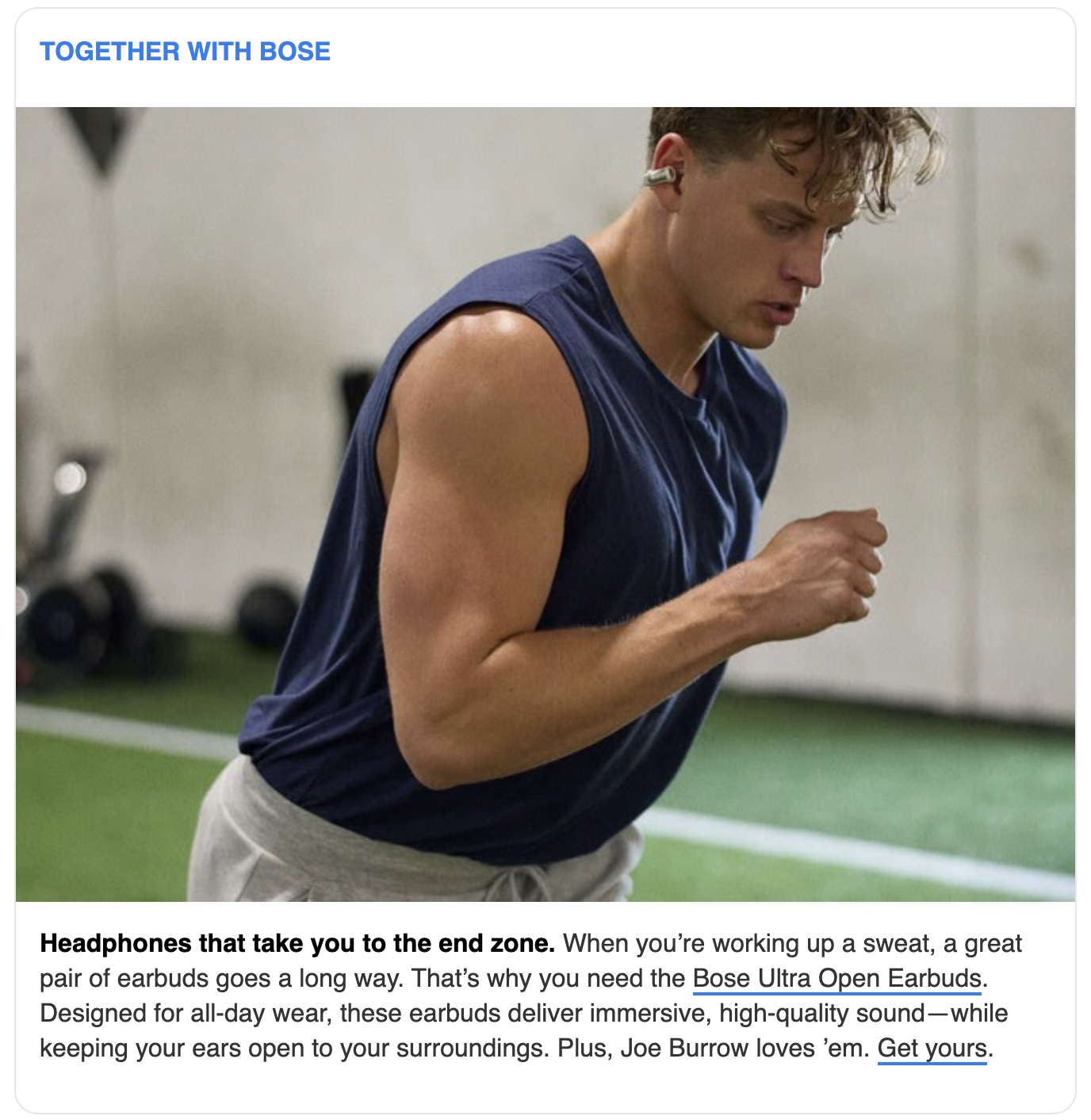
Located further down in your newsletter, these typically include:
“Together with [Brand]” callout
Image placement
Shorter body copy
Clear CTA
3. List Sponsorships
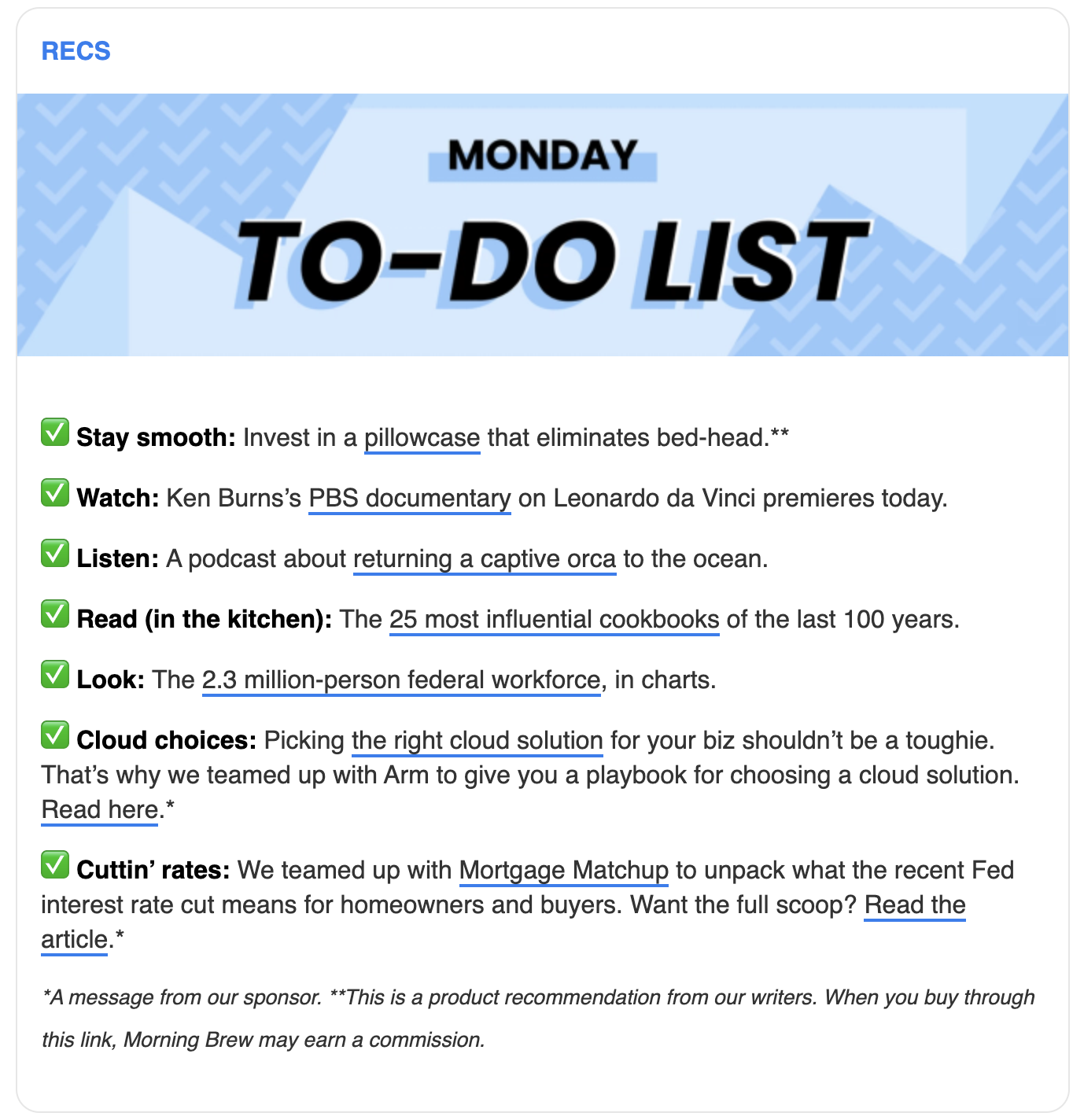
Perfect for testing new newsletter sponsors, these native integrations:
Blend seamlessly with your content
Much shorter ad copy
Can be marked with a simple asterisk or “sponsored” note
Work well with a CPC pricing model (since they're further down)
The Morning Brew drops several of these ads in their daily “To-Do List”:
For Brands 🎯
Each newsletter sponsorship format serves different marketing objectives.
Title Sponsorships:
As the premium offering, these give you the highest visibility and brand awareness possible in a newsletter.
They're perfect when you want to make a big splash, like during a major product launch or when you need space to tell a comprehensive brand story.
Secondary Sponsorships:
Want to test the waters without committing to a title sponsorship?
Secondary placements offer strong visibility at a more budget-friendly price point.
They're especially effective for testing new audiences while maintaining solid conversion potential.
List Sponsorships:
List sponsorships are the most cost-effective entry point for testing newsletter sponsorships.
With potential pay-for-performance models and shorter copy requirements, they're ideal for testing specific offers or promotions without a major upfront investment.
The key to success with these 3 formats?
Work with publishers to craft native content that matches their newsletter's voice.
Your ad should feel like a natural part of the reading experience, not an interruption.
The days of simple banner ads are behind us.
Today's newsletter sponsorships offer deeper engagement and better performance.
At Wellput, we help publishers and brands navigate these new sponsor formats.
We'll match you with the perfect partners, handle intros and negotiations, setting you up for sponsorships that drive real results.
Need help finding the right sponsorships for your goals?
Try Wellput risk-free, here.