
Your landing page is asking for too much, too soon
Why you should be optimizing for the 99% who are not ready to buy
Why most landing pages fail paid media traffic and how to convert more visitors over time
Brands should stop optimizing for the 1% of site visitors who are ready to buy. Many landing pages are designed only for immediate conversions, even though most visitors from paid media campaigns are still exploring their options.
Why Most Paid Media Traffic Isn’t Ready to Buy
Paid media drives awareness, consideration, and sometimes even intent. But if you expect an ad to send people to your website ready to purchase immediately, you are holding paid media to too high a standard and hurting your growth.
How often do you see an ad and instantly buy the product?
For me, maybe once or twice in the past few years.
That is not typical human behavior. Most people are not that impulsive when making buying decisions.
We click on ads to gather information. If the ad did its job, we are interested. We are leaning in. We want to be convinced. This is especially true for paid social and display advertising, where the goal is often to introduce a product rather than close a sale immediately.
But what do we often find when we land on the page?
A desperate attempt to close the deal.
That approach works for the tiny percentage of people who arrive ready to buy right now. Think paid search traffic. And yes, improving conversion rate matters. Moving from 1.0% to 1.3% is a real lift. It can improve economics, make a campaign look stronger, and give the team something worth celebrating.
The 99% Opportunity Most Landing Pages Ignore
But there is a much bigger opportunity hiding underneath that win:
99% of your paid media traffic still leaves without converting. That means most landing pages are ignoring the majority of potential customers who simply need more time and trust before making a purchase decision.
That is the real opportunity.
A landing page optimized only for immediate conversion is like starting a baseball game with your closer. You are using your best late-game weapon at the very beginning, even though the outcome is still uncertain.
Why Traditional Landing Page Optimization Falls Short
Traditional landing page optimization often focuses on immediate purchases. While this approach works for high-intent traffic like paid search, it can limit growth when applied to broader paid media channels that generate awareness and consideration.
The mistake is treating every visitor like they are ready for the final step.
They are not.
So instead of treating the page like a checkout counter, treat it like the beginning of a relationship. Traditional landing page optimization often focuses on immediate purchases. While this approach works for high-intent traffic like paid search, it can limit growth when applied to broader paid media channels that generate awareness and consideration.
Instead of asking, “How do I get this person to buy right now?” ask, “What brought you in today?” or “How can I help you?”
Think about the best shopping experiences you have had, whether it was buying a car or ordering a gift online. Odds are the experience felt low pressure, honest, educational, and rewarding.
Your landing page can and should feel the same way.
What a Landing Page Built for the 99% Looks Like
It should help visitors orient themselves.
Please tell us who you are so we can help you find what you need.
It should build confidence. Social proof, testimonials, and clear brand positioning help visitors decide whether they want to keep exploring.
Did you know our brand has a five-star rating? Here is what happy customers are saying.
It should guide discovery.
Here are our best sellers.
In other words, shift the goal from transaction to momentum.
Rethinking How You Measure Landing Page Success
Expect many people to leave without making a purchase. That is normal. Your job is not to force the sale. Your job is to create a second chance.
Capture their email address gently. Offer something useful. Provide trust signals. Do not throw every offer, discount, and financing option at them the second they arrive. And if they leave, retarget them.
Successful brands design landing pages that move visitors through stages of interest rather than forcing an immediate purchase decision. This approach captures leads, builds trust, and increases the likelihood of future conversions.
The brands that win understand the sequence:
The ad earns the click.
The page earns the trust.
The lead capture earns the second chance.
The follow-up earns the sale.
Too many landing pages start at the end.
The smartest marketers do not optimize only for the 1% who are ready now. They build systems for the 99% who might be ready later.
Why Most Landing Pages Push Too Hard, Too Fast
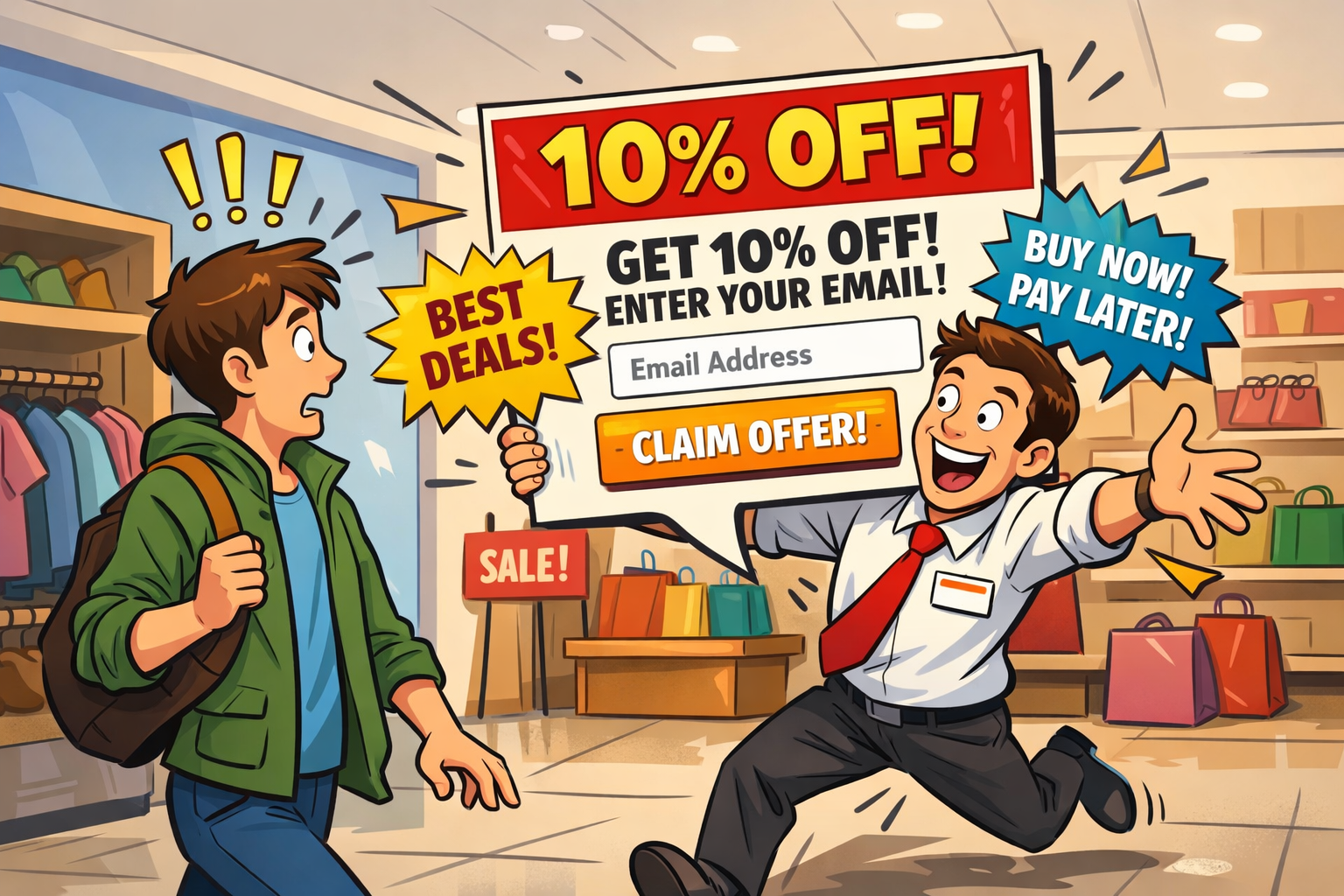
That is where the real growth opportunity is. Most landing pages greet visitors like an overeager salesperson in a retail store.
You walk in, and before you can look around, they jump in front of you and say:
Give me your email for 10% off.
Here are our best deals.
We offer buy now, pay later.
Ready to check out?
You would probably turn around and walk right back out.
And yet that is exactly how many brands treat paid media visitors.
They spend all this money to get someone interested enough to click, only to greet them with a desperate attempt to close the sale the second they arrive.
That is a mistake.
Most Visitors Are Still Deciding
Brands should stop optimizing for the 1% of site visitors who are ready to buy.
Paid media can drive awareness, consideration, and even intent. But if you expect an ad to send people to your website ready to purchase immediately, you are holding paid media to too high of a standard, and it is costing you growth.
How often do you see an ad and instantly buy the product?
For me, maybe once or twice in the past few years.
That is not typical human behavior. Most people are not that impulsive when making buying decisions.
We click on ads to gather information. If the ad did its job, we are interested. We are leaning in. We want to be convinced.
But what do we all too often find when we land on the page?
A page that is trying to skip straight to the end.
That approach does work for a small slice of visitors. Some people really are ready to buy right now. Think paid search traffic, branded traffic, or someone returning after doing their homework.
And yes, improving conversion rate matters. Moving from 1.0% to 1.3% is real. It can improve economics, make a campaign look stronger, and give the team something worth celebrating.
But there is a much bigger opportunity hiding underneath that win:
99% of your paid media visitors still leave without converting.
That is the audience you should be designing for.
A landing page optimized only for immediate conversion is like starting a baseball game with your closer. You are using your best late-game weapon at the very beginning, even though the outcome is still far from certain.
The mistake is assuming every visitor should be treated as if they are ready for the final step.
They are not.
Design the Page for Discovery, Not Just Checkout
So instead of treating the page like a checkout counter, treat it like the beginning of a relationship.
Instead of asking, “How do I get this person to buy right now?”
Ask, “What brought you here today?”
Ask, “How can I help you?”
Ask, “What would make you feel confident moving forward?”
Think about the best shopping experiences you have had, whether it was buying a car or ordering a gift online.
Odds are the experience felt honest, helpful, educational, and low-pressure.
Your landing page can and should feel the same way.
It should feel like a helpful guide, not a cashier waiting impatiently with the card reader out.
When someone lands on your site, they are usually trying to answer a few basic questions. Am I in the right place? Does this seem credible? Is this product actually for someone like me? Can I trust this brand enough to spend more time here?
A good landing page helps answer those questions naturally. It helps people orient themselves. It gives them a better sense of what you sell, who it is for, and why it might be worth their attention. It reassures them without smothering them.
That might mean showing social proof earlier. It might mean making it easier to browse best-sellers. It might mean guiding people based on what they are actually looking for, rather than throwing every possible offer in their faces the second they arrive.
And yes, it might mean asking for an email address. But the goal should not be to corner someone into handing it over. The goal should be to give them a good reason to stay connected because they believe there is value in hearing from you again.
That is the shift.
You are not trying to force a transaction. You are trying to create momentum.
Measure Momentum, Not Just Immediate Conversions
It also changes how you measure success. Last click conversions and ROAS are too narrow if the real goal is to build trust and move people closer to a purchase over time. A better framework looks at whether the visit created engagement, captured intent, led to another touchpoint, or increased the odds of a future sale. That is where engagement signals, attribution, and lifetime value become more useful than judging everything by what happened on the first visit.
Some people will leave without buying. That is normal. It does not mean the visit was worthless. If they leave with a better impression of your brand, a clearer understanding of what you offer, or a reason to come back, that visit still mattered. If they join your email list, engage with a retargeting ad later, or return after thinking it over, your landing page did its job.
The brands that win understand this sequence.
The ad earns the click.
The page earns the trust.
The lead capture earns the second chance.
The follow-up earns the sale.
Too many landing pages start at the end.
The smartest marketers do not just optimize for the 1% who are ready now. They build systems for the 99% who might be ready later.
That is where the real growth opportunity is.
Because once you stop measuring success only by what happens in the first visit, you can start building the kind of experience that makes people want to come back.
And in a world where attention is expensive and trust is hard to earn, that second chance is often where the sale really begins.
Thanks for reading. I’d love to hear your thoughts on these topics.
If you haven’t seen it already, check out the great Dustin Howe’s review of Wellput here: https://dustinhowes.com/wellput-newsletter-sponsorships-for-brands/
Frequently Asked Questions
Why do most landing pages fail paid media traffic?
Most landing pages are optimized only for immediate purchases, even though most visitors from paid media campaigns are still researching.
How should landing pages handle paid media visitors?
Landing pages should focus on building trust, providing helpful information, and capturing leads rather than forcing an immediate sale.
What percentage of landing page visitors convert immediately?
Typically only a small percentage of visitors convert on their first visit, which is why capturing emails and nurturing leads is important.
What makes a good landing page for paid media?
A strong landing page provides context, builds credibility, guides discovery, and offers a clear next step such as joining an email list or learning more.
