
Your Newsletter Sponsorship Ad Copy Is Probably Costing You Performance
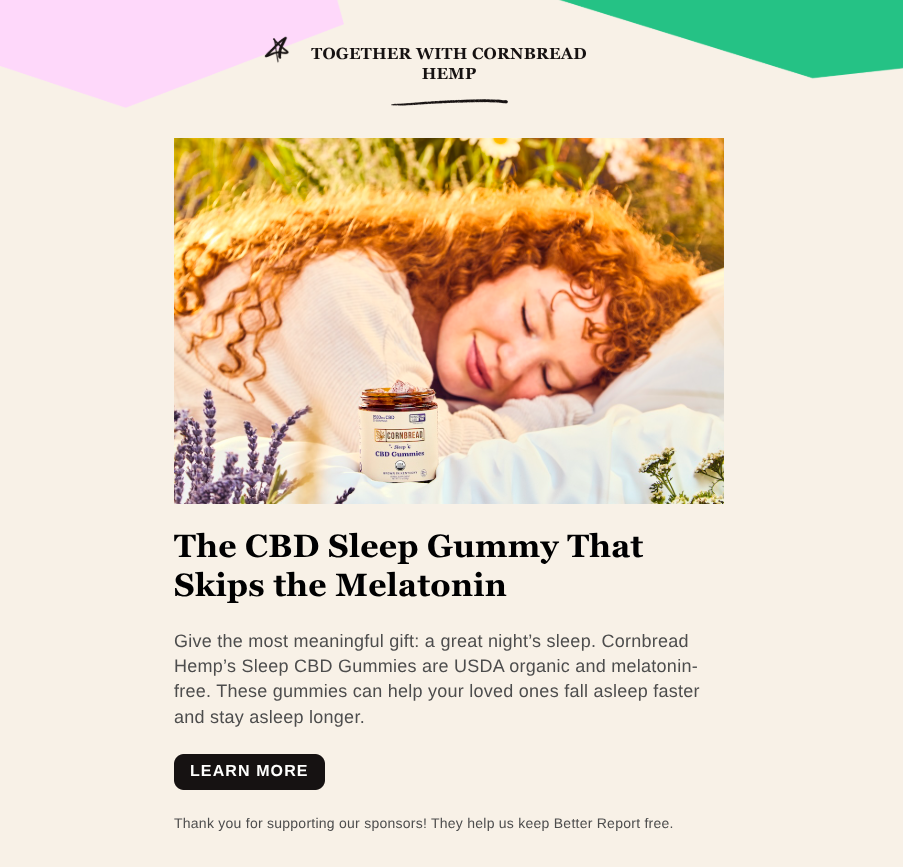
An example of a newsletter sponsorship for Cornbread Hemp
Poor newsletter ad copy is one of the biggest hidden reasons sponsorship campaigns underperform.
This message matters for both brand marketers and newsletter publishers.
Most conversations with marketers start with performance, pricing, and budget. Only after those things are settled do we start talking about targeting, creative, landing pages, tracking, and optimization.
But the more I think about it, the more it seems like we have it backwards. In reality, newsletter sponsorship performance is driven by creative, landing page experience, and tracking, not just pricing or media placement.
Those conversations should start with creative, landing page design, and tracking because those are the inputs that shape everything else. They influence who clicks, what those clicks cost, how prospects behave after the click, and whether a campaign has any real chance of performing efficiently.
When you operate on a Cost Per Click model like we do at Wellput, the goal of sponsorship creative is not just to drive clicks. The goal is to drive qualified clicks from the right prospects. This is especially important in CPC newsletter sponsorship models, where every click has a direct cost and poor targeting reduces return on investment. Good ad copy has two jobs. It needs to capture your target audience's attention and filter out readers who are not a fit before you pay for their clicks.
If the creative is weak, the landing page is disconnected, or the tracking is incomplete, performance suffers. And when performance suffers, pricing gets harder to justify, budgets get tighter, and optimization gets less effective.
In other words, creative is not something to think about after the media plan is approved. Strong newsletter ad creative directly impacts click-through rate, cost efficiency, and downstream conversion performance. It is one of the main drivers of whether the plan works in the first place.
A good newsletter ad does more than attract attention. It educates the reader and sets a clear expectation for what happens after the click. The best creative helps the right readers raise their hand and helps the wrong ones move on. That may not maximize total clicks, but it usually improves traffic quality and increases the likelihood of downstream conversion. In fact, optimizing for qualified traffic over total traffic is one of the most effective ways to improve campaign performance over time.
Newsletter Ad Copy Best Practices That Improve Performance
A few best practices stand out.
Keep headlines short and interesting. High-performing newsletter ad headlines create curiosity without overwhelming the reader. The headline does not need to explain the full offer. Its job is to get the reader to keep going. The body can provide the context, and the CTA should make clear what the reader will find on the other side of the click.
Add personality. This is especially true in email newsletter advertising, where tone and trust matter more than polish. Newsletter readers are used to a more human tone. Creative that feels stiff or overly polished often feels out of place. In most cases, a more natural and conversational style performs better.
Use the name of the newsletter when possible. A line like “[Newsletter Name] readers can use this exclusive link” feels more relevant and more native to the environment.
Include promo codes or special offers when available. Clear incentives often increase newsletter ad conversion rates, especially when paired with urgency. A clear offer gives readers a stronger reason to act. If there is a promo code or expiration date, make sure it is included in the copy.
Just as important, the landing page needs to continue the story the ad starts. This is where many newsletter sponsorship campaigns fail, because the post-click experience does not match the promise of the ad.
Message match between ad creative and landing page is one of the most important drivers of conversion. When expectations are aligned, users are more likely to stay, engage, and convert.
If someone clicks an ad about emergency vet bills and lands on a page that leads with rewards, the disconnect creates friction immediately. Even if both messages are technically correct, the mismatch can increase bounce and reduce conversion.
The solution is simple. Bridge the creative and the landing page experience. Use landing page hero sections that reflect the specific angle of the ad. Keep the language and visuals aligned. The more continuity there is between the ad and the page, the more likely the user is to stay engaged. This alignment improves user experience, reduces bounce rates, and increases the likelihood of conversion.
Real Example of High-Performing Newsletter Ad Creative
The Cornbread example below does this well. The sponsorship creative is focused on sleep. The landing page is also focused on sleep. The imagery, product framing, and message all reinforce the same outcome. There is no bait and switch. A reader who clicks expecting a sleep solution lands on a page that immediately confirms they are in the right place.
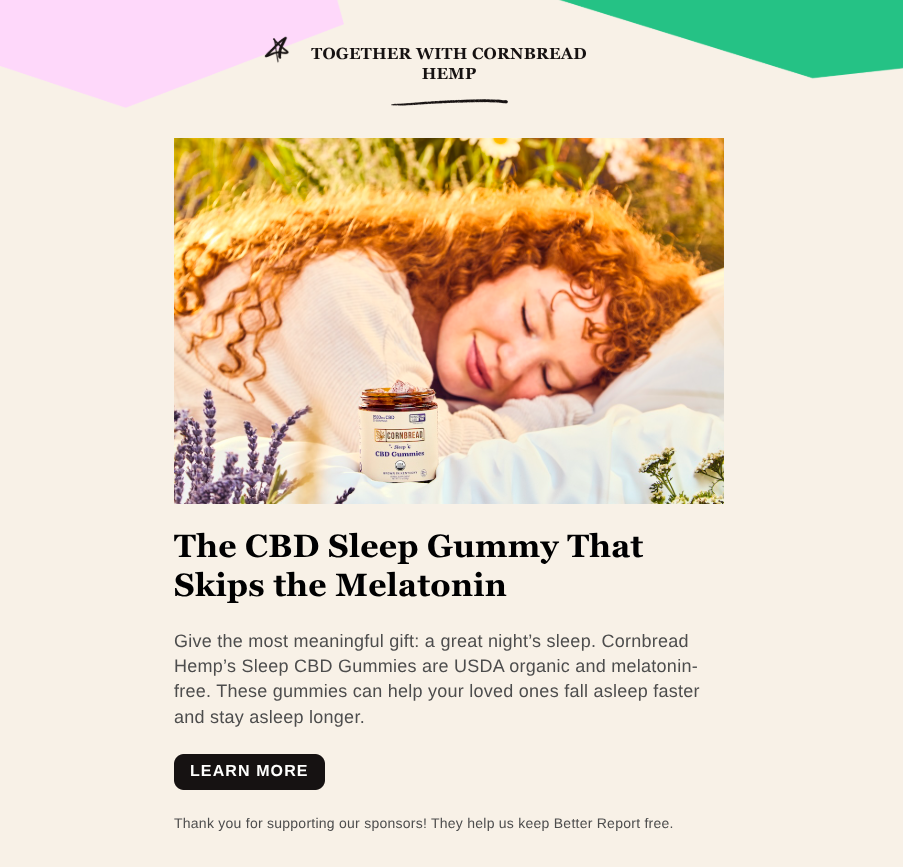
Ad creative and landing page alignment in action
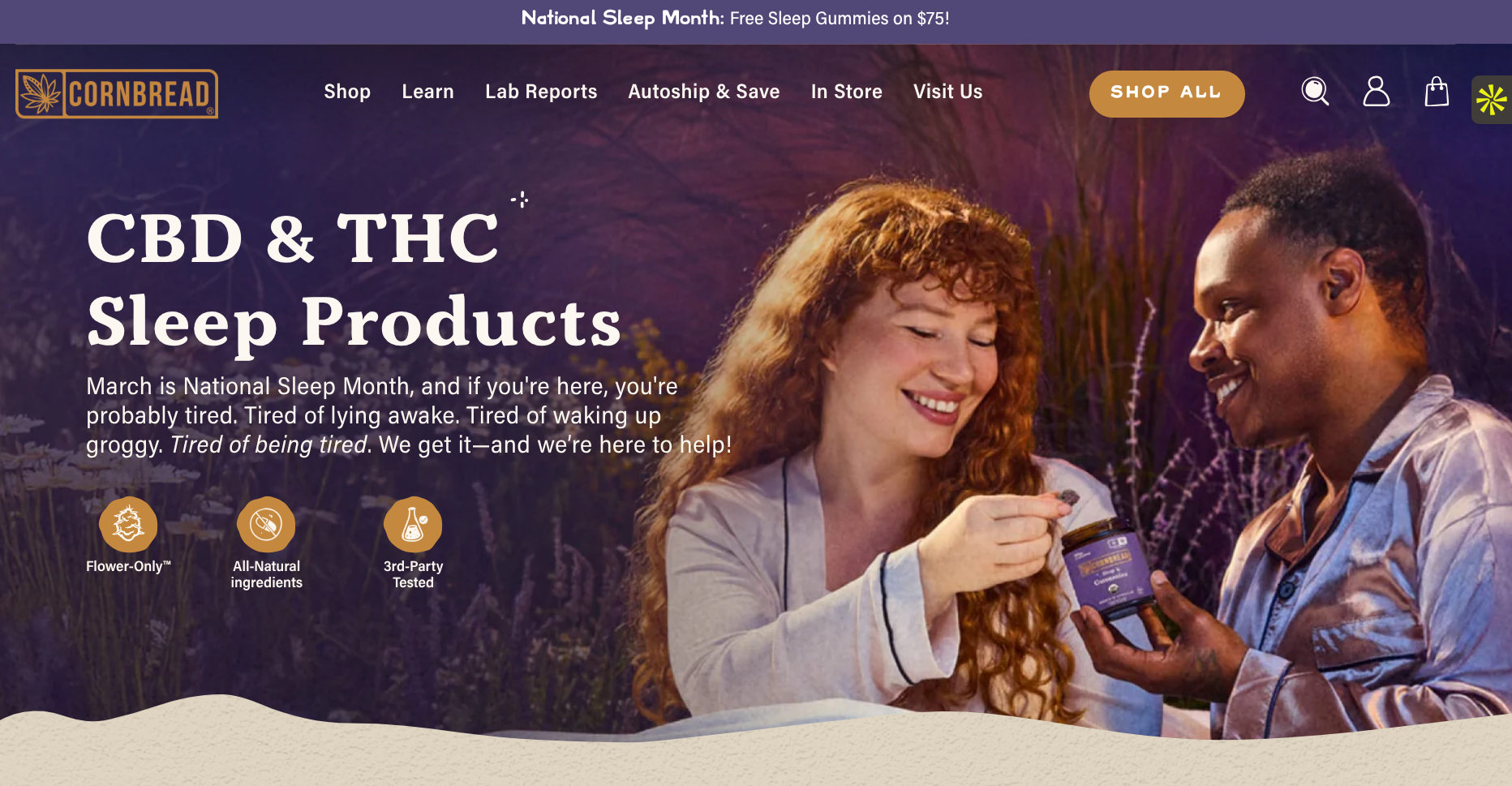
Cornbread keeps the promise of the ad by carrying the same sleep-focused message through to the landing page
That kind of continuity matters more than many marketers realize. It lowers friction, improves trust, and gives the click a better chance of turning into meaningful engagement.
Here’s another example from The Pour Over, running a sponsorship for Wildgrain.
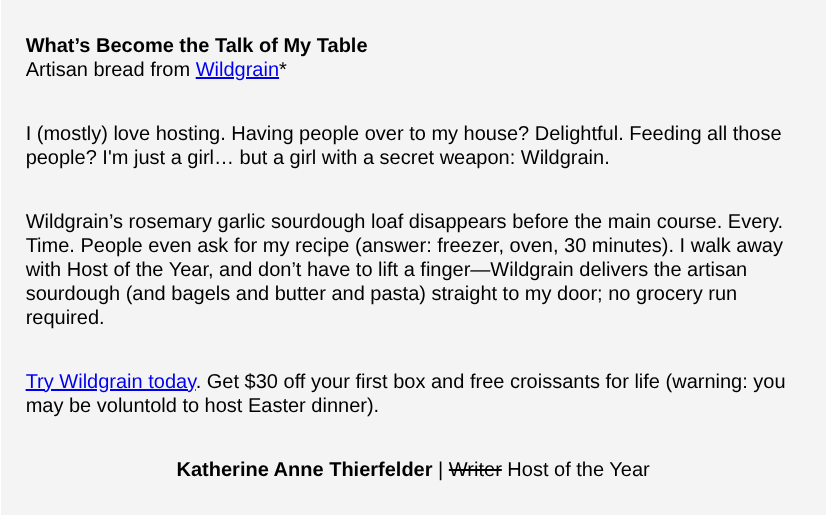
The writer asked for and received a Wildgrain box for free, and wrote about their first-hand experience.
There is also a lesson here for publishers.
If you run a newsletter, do not settle for the copy a sponsor sends over. Treat it as a draft. Rewrite it in your voice and send your version back for approval.
That may be the highest ROI skill a newsletter operator can build.
The ability to rewrite ad copy quickly, clearly, and in a way that feels native to your publication improves the reader experience, improves campaign performance, and improves sponsor retention. That skill can pay for itself through sponsor retention alone.
Creative is not a secondary detail. It is one of the core levers behind performance.
If we want better outcomes from newsletter sponsorships, the conversation should not start with budget.
It should start with the message.
Frequently Asked Questions
What makes good newsletter ad copy?
Good newsletter ad copy captures attention, filters the right audience, and clearly sets expectations for the landing page experience.
Why is newsletter ad copy important for performance?
Ad copy directly impacts click quality, conversion rates, and overall return on investment in newsletter sponsorship campaigns.
What is message match in advertising?
Message match refers to the alignment between ad creative and landing page content, ensuring users find what they expect after clicking.
How do you improve newsletter sponsorship performance?
Focus on strong creative, aligned landing pages, accurate tracking, and optimizing for qualified clicks rather than total clicks.
